
Request Lifecycle
Understanding Jetpath's request lifecycle is essential for building efficient and maintainable applications. This document outlines the complete journey of a request from arrival to response.
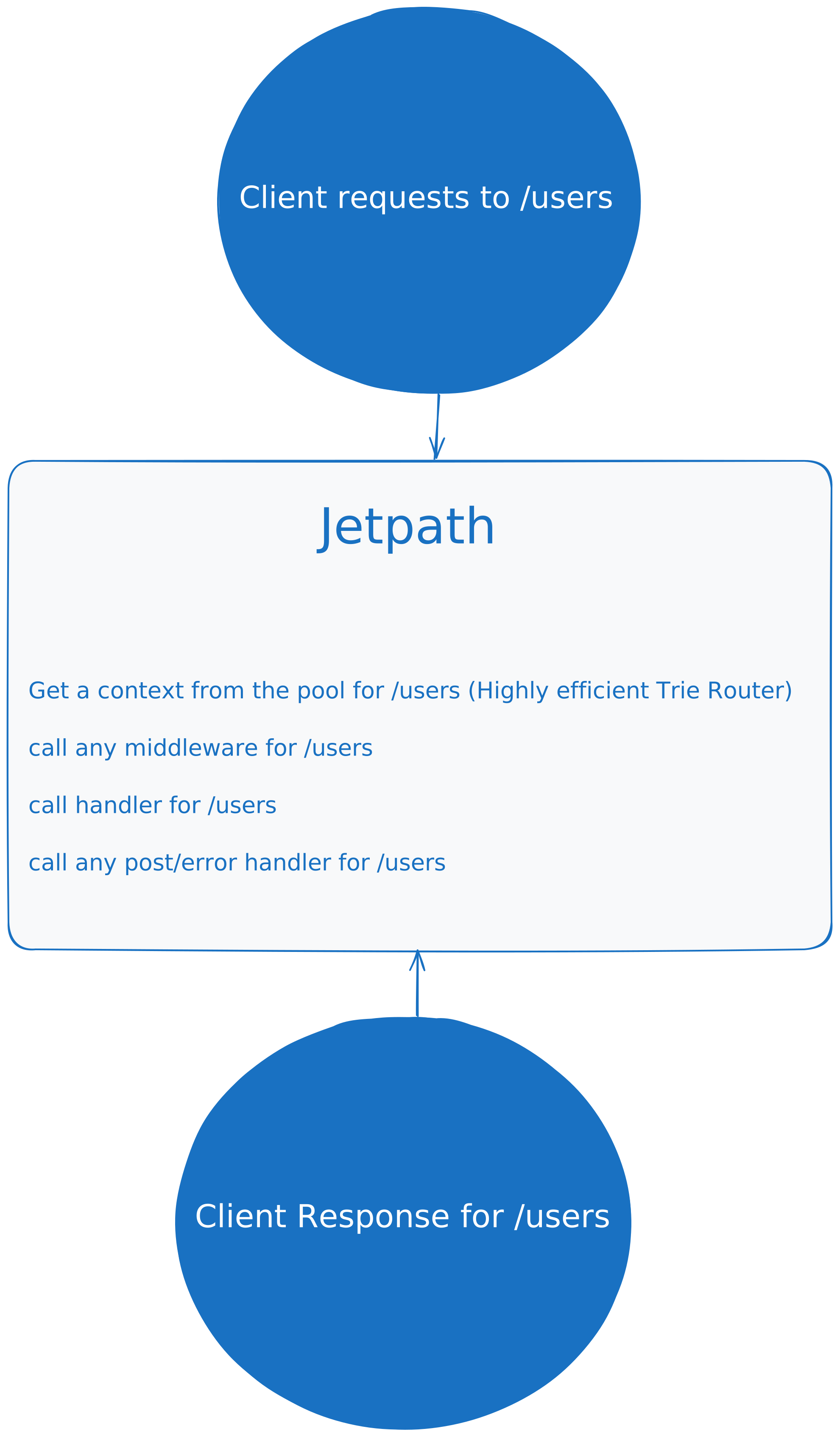
1. Route Matching
When a request arrives:
- The request path is normalized (leading/trailing slashes stripped, query string separated)
- An O(1) hashmap lookup is attempted for exact static paths (fast path)
- If no exact match, the trie is walked for parameterized and wildcard routes
- Route parameters (
:id,*) are extracted during the trie walk
2. Context Creation
A Context object is created or reused from the context pool:
- The pool avoids allocating a new object per request, reducing GC pressure
- CORS headers are pre-populated from a cached template
- Request metadata (method, path, params) is attached
- State, cookies, and body caches are reset
3. Pre-Handler Middleware
Before reaching the route handler, the request passes through middleware pre-handlers:
- Middleware is matched by path prefix (global
MIDDLEWARE_first, then scoped) - Pre-handlers run in order of specificity (broadest to most specific)
- Any pre-handler can short-circuit by calling
ctx.send()(e.g., auth rejection) - Post-handler callbacks are collected for later execution
4. Route Handler Execution
The matched route handler runs:
ctx.parse()parses and validates the request body against the schemactx.parseQuery()parses and validates query parametersctx.send()validates the response against the response schema (if defined)- The handler can be sync or async
5. Post-Handler Middleware
After the handler completes (or throws), post-handlers run in reverse order:
- Each post-handler receives
(ctx, err)whereerris defined if the handler threw - Error handling, response logging, and header additions happen here
- The first post-handler to call
*0 determines the error response
6. Response
The response is sent to the client:
- For JSON responses, a pre-baked headers clone avoids per-request object creation
- Set-Cookie headers are sent as separate headers (RFC 6265 compliant)
- The context is returned to the pool for reuse
Error Flow
If an error occurs at any stage:
- The error is caught by Jetpath's internal handler
- All collected post-handler middleware functions are called with the error
- If no middleware handles it, a generic 500 response is sent
- The context is still returned to the pool
Performance Notes
- Static routes use O(1) hashmap lookup — the most common case
- Dynamic routes use trie traversal — O(n) where n = path segments
- Context pooling eliminates per-request allocation overhead
- CORS headers are cloned from a frozen template via a pre-built closure
- The pool is capped at 1024 contexts to bound memory usage